
How Dirty Air Ducts Affect People with Asthma and Allergies is a growing concern for homeowners in Olathe. Most people with asthma or allergies spend a lot of time and money managing their condition through medications, air purifiers, allergen-proof mattress covers, and frequent vacuuming.
But if the air ducts in their home have not been cleaned in years, all of those efforts are working against a system that is actively pumping contaminants back into the air they are trying to protect.
Your home’s HVAC system gets dirty with regular everyday use, and since air ducts are a common place for dust, dirt, and allergens to build up, those dirty ducts can contribute to larger health issues, especially for people with respiratory conditions, autoimmune disorders, asthma, and allergies.
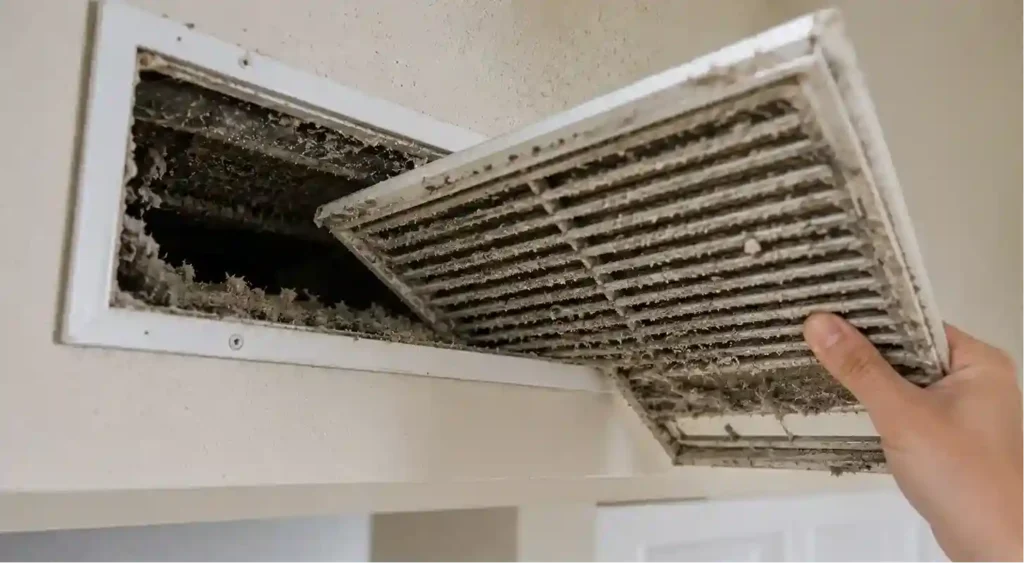
What Actually Lives Inside Dirty Air Ducts
Before understanding how ductwork affects asthma and allergies, it helps to know exactly what builds up inside a neglected system.
Dust Mites
Dust mites thrive in warm, dusty environments, which are exactly the conditions inside neglected air ducts. Their droppings are a common allergy trigger and can easily become airborne through the ventilation system. Dust mite allergens are one of the most common triggers for both allergic rhinitis and asthma attacks.
Mold Spores
Mold spores can grow in humid or damp areas of air ducts, and when these spores become airborne, they can cause severe allergic reactions and respiratory distress. The Centers for Disease Control and Prevention (CDC) states that one in three Americans is allergic to mold, and prolonged exposure to mold-contaminated air can lead to chronic health issues including sinus infections and lung irritation.
Pet Dander and Pollen
Every time a pet walks through the house or a window is opened briefly, dander and outdoor pollen enter the air. Your HVAC system pulls that air in through the return vents and deposits those particles inside the ductwork. From there, they get redistributed into every room each time the system cycles on.
Volatile Organic Compounds
In addition to biological contaminants like dust and mold, air ducts can also harbor volatile organic compounds (VOCs). These are chemical particles that come from cleaning products, paint, furniture, and building materials. When trapped and recirculated through dirty ductwork, VOCs add an additional chemical layer to the air quality problem that standard allergy medications cannot address.
Bacteria and Biological Debris
Rodent droppings, insect remains, and accumulated biological waste from years of use can settle deep inside ductwork. People with asthma and other allergies are the most likely to become sick from this kind of contamination, and this is especially true for children and the elderly.
How Dirty Ducts Specifically Trigger Asthma
Asthma is not just a breathing difficulty. It is a chronic inflammatory condition of the airways. The bronchial tubes narrow when exposed to triggers, making it harder to move air in and out of the lungs. This is why the quality of the air being breathed matters so much for asthma patients.
For individuals with asthma, airborne particles can trigger bronchial spasms, leading to wheezing and shortness of breath. Allergens like dust and pollen, when circulated through dirty air ducts, can aggravate immune responses, causing persistent discomfort and even chronic inflammation.
Here is what makes dirty ductwork particularly dangerous for asthma sufferers. The exposure is not occasional. It is constant. Every time the HVAC system runs, which in a Kansas home can be eight to twelve hours a day during summer and winter, those triggers are being actively pushed through the air. A person living in a home with contaminated ductwork is essentially having a low-level asthma trigger running on a loop throughout the day.
Family members with asthma can suffer from dirty air vents as the allergens circulating throughout the indoor air trigger increased and longer attacks.
The most telling sign is when asthma symptoms are noticeably worse at home compared to any other location. If a child breathes fine at school but struggles at home, or if an adult feels better during a work trip but returns to symptoms the moment they walk back through the front door, the indoor environment is very likely the source.

Children Are at Greater Risk Than Adults
Children breathe faster than adults, which means they take in more air per minute relative to their body weight. They also spend more time indoors, particularly in their bedrooms where the HVAC runs overnight. For these reasons, the impact of dirty ductwork is more pronounced in children.
The American Academy of Pediatrics has noted that children are particularly susceptible to poor air quality, with studies showing that exposure to dust and allergens in the home can increase the risk of developing asthma by 40%. In fact, 8.4% of children in the United States are diagnosed with asthma, and poor indoor air quality is a significant contributing factor.
For families in Olathe with young children, this is not a minor concern. A child who is repeatedly exposed to contaminated indoor air during their developmental years faces a higher lifetime risk of chronic respiratory conditions.
Symptoms to Watch For in Your Home
If you are not sure whether your ductwork is affecting your asthma or allergies, these are the specific symptoms that point toward an indoor air quality problem rather than an outdoor or seasonal one.
Asthma attacks or difficulty breathing that happen primarily at home and ease when you leave. Persistent coughing that does not resolve even outside of cold and flu season. Sneezing, congestion, and runny nose that are present year-round rather than only during spring or fall. Itchy, watery, or red eyes that appear shortly after the HVAC system turns on. Waking up with a stuffy nose or sore throat even when you are not sick. Skin rashes or hives that flare up at home without an obvious cause. Fatigue and brain fog that improves when you spend time outside or in a different building.
Persistent coughing, allergies, asthma flare-ups, respiratory infections, and worsening of pre-existing pulmonary conditions are all potential indicators of dirty air ducts.
The Role of HVAC Filters and Why They Are Not Enough
Many homeowners believe that regularly changing the HVAC filter is sufficient to keep indoor air clean. Filters do an important job, but they have real limitations.
Standard one-inch HVAC filters are designed to protect the equipment, not to purify the air in your home. They capture large particles but allow smaller allergens like mold spores, fine dust particles, and pet dander to pass through. Those particles then settle inside the ductwork and accumulate over months and years.
Even high-efficiency MERV-rated filters cannot clean ductwork that is already contaminated. The buildup inside the ducts is not going anywhere regardless of what filter sits at the intake. The only way to remove what has accumulated inside the duct system is through a professional cleaning.

How Air Duct Cleaning Helps Asthma and Allergy Sufferers
A professional air duct cleaning removes the accumulated layer of contaminants from inside the duct system so that the air circulating through your home is no longer carrying those particles into your living spaces.
Regular cleaning of air ducts can not only improve the indoor air quality and reduce health risks but also increase the efficiency of HVAC systems, resulting in potential savings on energy bills of 20 to 30% as indicated by the U.S. Department of Energy and EPA.
For asthma and allergy sufferers specifically, the benefits of professional duct cleaning include a significant reduction in airborne triggers that cause attacks and flare-ups, elimination of mold spores and biological contaminants that worsen respiratory conditions, removal of dust mite colonies and their allergen-rich droppings, and cleaner airflow that no longer works against the medications and other treatments the person is already using.
Many families in Olathe report a noticeable improvement in asthma and allergy symptoms within the first few weeks after a professional duct cleaning, particularly in children who sleep in rooms with active vents overnight.
What to Do If Someone in Your Home Has Asthma or Allergies
If a family member in your Olathe home is managing asthma or chronic allergies, here is a practical action plan that addresses the ductwork specifically.
Start by scheduling a professional duct inspection to assess the current condition of your system. If the ductwork has not been cleaned in more than two to three years, schedule a full cleaning with a NADCA-certified technician. Ask about air duct sanitizing as an add-on service, which applies an antimicrobial treatment after cleaning to prevent mold regrowth. Consider upgrading your HVAC filter to a higher MERV rating following the duct cleaning to maintain air quality between professional visits. Install a whole-home dehumidifier if your Olathe home has humidity issues, since moisture inside ductwork is what allows mold to grow in the first place. Schedule duct cleaning more frequently if you have pets, as pet dander accumulates quickly and is one of the most common asthma and allergy triggers.
How Often Should Homes with Asthma or Allergy Sufferers Clean Their Ducts?
For homes without any respiratory health concerns, cleaning every three to five years is a reasonable standard. But for homes where someone is managing asthma, allergic rhinitis, or other respiratory conditions, every two to three years is more appropriate.
In Olathe specifically, the combination of humid summers and the heavy reliance on HVAC systems year-round means ductwork accumulates contaminants faster than in milder climates. Staying ahead of that buildup is essential for families with respiratory health concerns.
Frequently Asked Questions
Can dirty air ducts cause asthma to develop in people who did not have it before?
Repeated long-term exposure to indoor allergens and irritants is a recognized contributing factor to the development of asthma, particularly in children. While dirty air ducts alone are not the sole cause of asthma, they create conditions that increase the risk. The American Academy of Pediatrics has noted that exposure to dust and allergens in the home during childhood raises the lifetime risk of developing asthma.
How quickly do symptoms improve after air duct cleaning?
Most families notice an improvement in indoor air quality within one to two weeks of a professional cleaning. For asthma and allergy sufferers, the reduction in airborne triggers can lead to fewer attacks and milder day-to-day symptoms within the same timeframe.
Is air duct cleaning safe for people with asthma?
Yes, but it is recommended that household members with asthma or severe allergies leave the home during the cleaning process. Professional duct cleaning temporarily disturbs settled particles before removing them. Once the cleaning is complete and the system has run for a short period, the indoor air quality improves significantly.
What other steps can I take alongside duct cleaning to improve indoor air quality?
Use allergen-proof covers on mattresses and pillows. Wash bedding in hot water weekly. Keep humidity levels in the home below 50% to discourage mold and dust mite growth. Vacuum with a HEPA filter vacuum at least twice a week. Keep pets out of bedrooms where allergy or asthma sufferers sleep.
Does air duct sanitizing help more than cleaning alone for allergy sufferers?
For homes where mold has been identified or where a musty odor persists after cleaning, sanitizing adds an antimicrobial layer that cleaning alone cannot provide. For households with allergy or asthma sufferers, sanitizing is a worthwhile addition to the standard cleaning process.