Can dirty air ducts make you sick? Yes, they can. When your home’s ductwork builds up excessive amounts of dust, mold, and debris, it can negatively impact indoor air quality and contribute to health issues ranging from allergy flare-ups to respiratory irritation. However, not every dusty duct is a medical emergency. The real danger depends on what is growing inside those ducts and how long those contaminants have been circulating through the air your family breathes every day.
If you or someone in your home has been sneezing more than usual, waking up with a scratchy throat, or feeling tired without a clear reason, your HVAC system might be the one to blame rather than seasonal allergies or a passing cold.
What Actually Lives Inside Your Air Ducts
Most homeowners never think about what is hiding inside their ductwork. Out of sight, out of mind. But your air ducts work like the lungs of your home. Whatever collects inside them gets pushed into every room every time your heating or cooling system runs.
The levels of indoor air pollutants found in dirty air vents are frequently two to five times higher than outdoor levels. That is a striking number, especially when you consider that most people spend the majority of their time indoors.
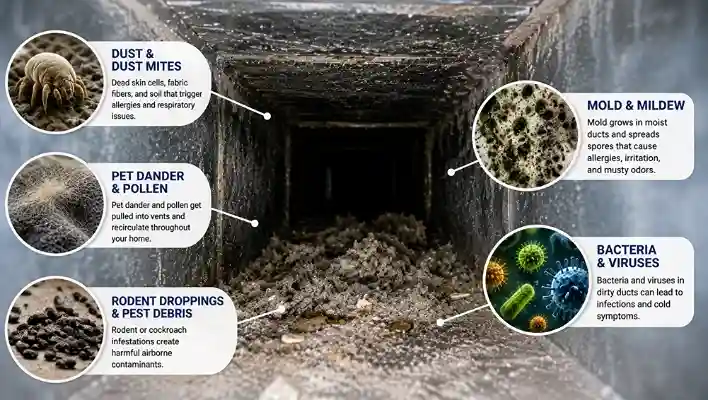
Here is what commonly builds up inside neglected ductwork:
Dust and Dust Mites: Ordinary household dust is not as harmless as it looks. It contains tiny particles of dead skin cells, fabric fibers, and soil tracked in from outside. Dust mites, microscopic creatures that feed on dead skin, thrive in dusty environments and their waste is a well-known allergen trigger.
Mold and Mildew: Mold contamination in vents and the HVAC system can spread throughout a property quickly and trigger allergies, respiratory irritation, and persistent musty odors in your home. Mold needs two things to grow: moisture and a surface to attach to. Air ducts, especially in humid climates, provide both.
Pet Dander and Pollen: If you have pets, their dander gets pulled into the return air vents and recirculates throughout your home. The same happens with pollen that drifts in from outside through open windows or doors.
Bacteria and Viruses: As bacteria and viruses circulate throughout your indoor air, they can work their way into your family’s sinuses, leading to infection and causing the common cold along with all of its symptoms.
Rodent Droppings and Pest Debris: In some cases, rodent or cockroach infestations in the ducts can create airborne contaminants that are far more serious than ordinary dust.
Can Dirty Air Ducts Make You Sick? Here’s How They Affect Your Health
Allergy Symptoms That Never Seem to Go Away
One of the most common signs that your air ducts are causing problems is allergies that flare up at home but not when you are elsewhere. If your allergies act up even when pollen counts are low, your ducts could be circulating dust and allergens that continuously trigger symptoms.
Typical allergy symptoms linked to dirty ductwork include sneezing, runny nose, itchy or watery eyes, and sinus congestion. These feel almost identical to seasonal allergies, which is why so many homeowners miss the real cause for months or even years.
Respiratory Problems and Breathing Difficulty
Dirty air ducts can cause a number of health problems, including allergies, asthma, and respiratory infections. Dust, dirt, and other allergens can build up in your air ducts over time and eventually be released into the air that you breathe, causing sneezing, coughing, and watery eyes.
For children and elderly family members, this is especially concerning. Their immune and respiratory systems are more sensitive to airborne irritants, making them the first to show symptoms when indoor air quality drops.
Worsening Asthma
Research shows that patients with pulmonary conditions show great improvement each time their primary living space receives air duct cleaning, indicating that dirty air ducts have a negative impact on the health of those living with pulmonary health conditions and allergies.
If someone in your household has asthma and their attacks seem to happen more at home than outside, this is a serious red flag worth investigating immediately.
Upper and Lower Respiratory Infections
If your family is getting sick more than normal, experiencing coughing, sneezing, sore throats, runny noses, nasal congestion, headaches, and low-grade fevers, they may have upper respiratory infections as a result of dirty air ducts. If the ducts remain uncleaned, these issues can develop into something worse, such as bronchitis or pneumonia.
This is the point where dirty air ducts shift from a nuisance to a genuine health threat.
Headaches, Fatigue, and Brain Fog
Poor indoor air quality caused by dirty air ducts can lead to headaches, dizziness, and constant fatigue. When air is filled with contaminants like volatile organic compounds, bacteria, and dust, it affects oxygen flow to the brain, making you feel sluggish and drained.
Many homeowners experiencing this do not connect it to their HVAC system because fatigue feels like a general wellness issue. They try sleeping more, drinking more water, or changing their diet. But if the air they are breathing around the clock is contaminated, none of those changes will fix the root problem.
Skin Irritation
The mold and mildew circulated throughout the air by dirty air ducts can worsen or lead to skin issues such as eczema, rashes, and hives. If a family member has unexplained skin irritation that no cream or medication seems to resolve, air quality could be the hidden trigger.
Sick Home Syndrome
Prolonged exposure to bacteria such as mold inside dirty ductwork can lead to an increase in irritability, fatigue, or anxiety. Skin rashes, wheezing, or nausea can also develop. People with underlying health issues or allergies can feel these effects more intensely.
This condition, sometimes called sick building syndrome when it occurs in offices, is more common in homes than most people realize.

7 Warning Signs Dirty Air Ducts Are Making You Sick
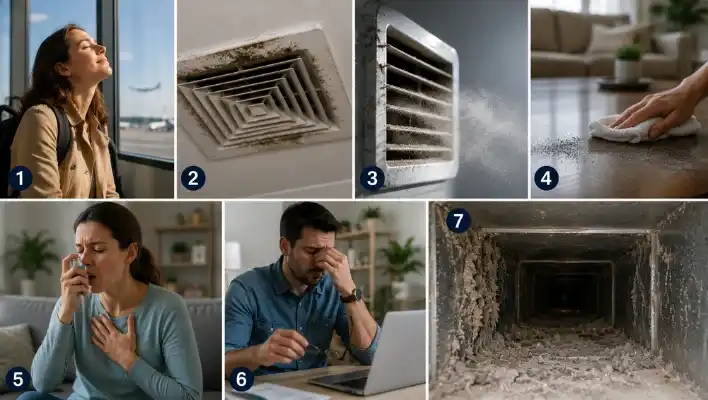
You do not need special equipment to notice the early warning signs. Here is what to look for:
1. Symptoms improve when you leave home
If your sneezing, congestion, or headaches go away when you are at work, visiting family, or on vacation, but return as soon as you are back home, your indoor air quality is almost certainly the issue.
2. Musty or stale smell when the HVAC runs
A musty odor the moment your heating or cooling kicks on is a strong indicator of mold or mildew growing somewhere in the system.
3. Visible dust blowing from vents
If you can see dust particles coming out of your vents when the system starts, the buildup inside is already significant.
4. Dust settles quickly after cleaning
You clean the house, but surfaces are dusty again within a day or two. Your ductwork may be the source of continuous recontamination.
5. Allergy and asthma attacks are worse indoors
Symptoms that escalate at home but improve outside strongly suggest circulating indoor allergens from the duct system.
6. Unexplained fatigue or brain fog
Feeling constantly drained without any obvious medical explanation, especially if it started recently or after moving into a new home, could be tied to air quality.
7. You have never had your ducts cleaned
Professional air duct cleaning is recommended every three to five years. If you have lived in your home for years without a single cleaning, there is a very real chance contaminants have accumulated to unhealthy levels.
Related: 10 Signs Your Air Ducts Need Cleaning Right Now
Who Is Most at Risk
Not everyone in the same household will react to dirty air ducts the same way. Some people are significantly more vulnerable:
Children Their lungs are still developing, making them far more sensitive to airborne irritants and pollutants.
Elderly adults The immune system weakens with age, reducing the body’s ability to fight off bacteria and allergens.
People with asthma or allergies Any existing respiratory sensitivity gets amplified when allergen levels in indoor air are elevated.
People with compromised immune systems Those undergoing chemotherapy or managing chronic illnesses have less defense against airborne bacteria and mold spores.
Pet owners Homes with pets accumulate dander faster, which means ductwork gets clogged with allergens more quickly than in pet-free households.
What the EPA Actually Says
It is worth being honest here. The EPA has noted that dirty air ducts are only one of many possible sources of particles present in homes, and that there is no evidence that a light amount of household dust or other particulate matter in air ducts poses any risk to health.
However, the EPA does recommend cleaning when specific conditions are present. You should consider having the air ducts in your home cleaned if there is substantial visible mold growth inside hard surface ducts or on other components of your heating and cooling system, or if ducts are infested with vermin.
The key takeaway is this: light dust is not an emergency, but mold, pests, and heavy buildup absolutely are. And if family members are experiencing symptoms that seem tied to the home environment, that alone is reason enough to take action.
How to Check Your Air Ducts at Home
Before calling a professional, you can do a basic inspection yourself:
Step 1 Remove a vent cover and look inside Use a flashlight to peer into the duct. Look for thick dust buildup, dark spots that could be mold, or any signs of pest activity.
Step 2 Smell the air when the system runs Stand near a vent when the HVAC turns on. A musty, dusty, or stale odor suggests contamination inside.
Step 3 Check your air filter A filter that is completely clogged and dark is a sign that contaminants are building up throughout the system. The U.S. Department of Energy recommends replacing HVAC filters every one to three months to help prevent mold growth.
Step 4 Watch for dust patterns around the home If certain rooms always seem dustier than others, check which vents serve those areas. The problem may be localized to specific duct sections.
When to Call a Professional
Do not wait until symptoms become severe. Call an HVAC professional or air duct cleaning service when:
- You see visible mold inside ducts or around vent covers
- A musty smell persists even after changing the filter
- Family members have ongoing symptoms tied to being at home
- You notice pest activity in or around your ductwork
- Your home is older and ducts have never been professionally cleaned
The EPA recommends hiring professionals for mold removal if the infestation covers more than ten square feet or involves inaccessible areas.
When hiring a service, ask them to show you before and after photos. A reputable company will document what they find and what they removed.
How to Prevent Dirty Air Ducts Going Forward
Cleaning your ducts is only half the job. Keeping them clean is the other half.
Change your air filter regularly. This is the single most effective thing you can do. A clean filter traps contaminants before they enter the duct system.
Control indoor humidity. Mold needs moisture to grow. Keep indoor humidity between 30 and 50 percent using a dehumidifier if needed, especially in humid climates.
Vacuum and dust regularly. Reducing the amount of dust and dander in your living spaces means less gets pulled into the return air vents.
Seal any duct leaks. Leaky ducts pull in dust and debris from attics, crawl spaces, and wall cavities. An HVAC technician can inspect and seal them properly.
Schedule routine HVAC maintenance. Annual professional inspections catch small problems before they become expensive or hazardous ones.
Frequently Asked Questions
How do I know if my air ducts are making me sick? The clearest sign is that your symptoms improve when you are away from home and return when you come back. Persistent sneezing, coughing, headaches, or fatigue that have no other medical explanation should be discussed with your doctor and investigated through an HVAC inspection.
Can mold in air ducts make you seriously ill? Yes. Mold spores circulating through your HVAC system can cause respiratory infections, worsen asthma, and trigger allergic reactions. In cases of heavy mold growth, professional remediation is necessary.
How often should air ducts be cleaned? Professional air duct cleaning is recommended every three to five years for most homes, though homes with pets, allergy sufferers, or recent construction may need cleaning more frequently.
Can I clean my air ducts myself? You can clean visible areas around vent covers and registers. However, deep cleaning of the full duct system requires professional equipment. An inadequate vacuum collection system can actually release more dust, dirt, and contaminants than if the ducts were left alone.
Does air duct cleaning actually make a difference? Yes, when done properly. Clean air ducts improve the air quality in your space by eliminating allergens such as dust, pollen, and pet dander, and can help alleviate asthma and allergy symptoms.
How much does professional air duct cleaning cost? The cost of air duct cleaning typically ranges from $300 to $500 for a standard home, though prices vary based on home size, duct complexity, and local market rates.
Key Takeaways
- Dirty air ducts can cause real health problems including allergies, respiratory infections, fatigue, headaches, and worsened asthma
- The most vulnerable people are children, elderly adults, pets owners, and anyone with existing respiratory conditions
- Mold, bacteria, pet dander, dust mites, and pest debris are the main culprits inside neglected ductwork
- The strongest warning sign is symptoms that disappear when you leave home and return when you come back
- The EPA recommends cleaning when there is visible mold, pest infestation, or heavy debris, and when occupants have unexplained health symptoms
- Changing your air filter every one to three months is the most impactful preventive step you can take
- Professional cleaning is recommended every three to five years for most homes
Final Thoughts
Your home is supposed to be a safe place, but the air circulating through it is only as clean as the system delivering it. Dirty air ducts do not always cause dramatic symptoms overnight. Instead, the effects tend to creep up slowly over months and years, disguised as seasonal allergies, frequent colds, or general fatigue.
If something feels off at home and no other explanation makes sense, start by looking up at your vents. The answer to why your family keeps getting sick might be hiding inside the walls, circulating through the air, one HVAC cycle at a time.