
If you’ve ever wondered, “What does a musty smell from vents mean?” the answer is usually moisture, mold, or mildew somewhere inside your HVAC system. That damp, stale odor you notice when your heating or cooling system turns on is more than just an annoyance. It can be a warning sign that something inside your ductwork, evaporator coil, drain pan, or air filter needs attention.
This guide explains the most common causes, potential health risks, and the steps you can take to eliminate the smell for good.
Why Your Vents Smell Musty
That musty odor forms when moisture meets organic buildup inside your HVAC system, creating the perfect breeding ground for mold, mildew, and bacteria. Your ducts carry air through every room in your home, which means whatever is growing inside those ducts gets circulated into the air your family breathes every single day.
The smell itself has a scientific explanation. Those odors usually come from microbial volatile organic compounds, also called MVOCs, released as mold breaks down material inside your system. They indicate you may be breathing air that has carried spores or byproducts into your living spaces.
Many homeowners ask, What does a musty smell from vents mean? Understanding the most common causes is the first step toward solving the problem permanently.If you are wondering what does a musty smell from vents mean, understanding the most common causes is the first step toward solving the problem permanently.
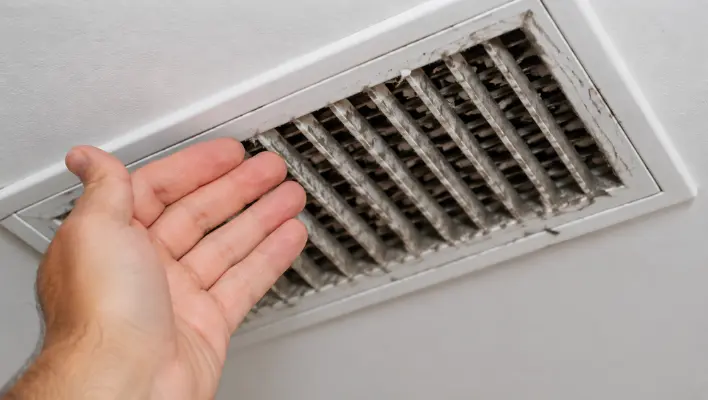
The 5 Most Common Causes of a Musty Smell From Vents
1. Mold and Mildew Growing Inside the Ductwork
This is the most common culprit. When your air conditioner removes moisture from the air as it cools your home, excess humidity that lingers in the ducts, coils, or drain pan creates the perfect environment for mold growth. If you notice the smell is stronger when the AC turns on, it is time to check for mold buildup.
Your air ducts are dark, rarely touched, and often carry just enough moisture to keep mold thriving. Ducts are dark, enclosed, and sometimes damp, making them a perfect spot for mold in air conditioning units, especially if residential air duct cleaning has not been done in a while.
2. A Dirty or Clogged Evaporator Coil
The evaporator coil is the part that cools your air. When it gets dirty, it becomes a breeding ground for mold. The coil is located in a dark area inside the indoor unit, and the blower constantly flows warm air over it. Condensation forms on the cold coil when warm air passes over it. When dust and debris collect on that moisture, mold follows quickly.
3. A Blocked or Clogged Condensate Drain Line
When your system’s condensate drain line becomes blocked, water backs up and stagnates, creating a damp environment ideal for mold growth. This standing water is one of the fastest ways for that musty odor to develop and spread through your entire ventilation system.
4. Leaky or Poorly Sealed Ductwork
Leaky ductwork lets moist and humid air into what should be a sealed air duct system. This in turn can allow excessive condensation to form inside the ductwork and air vent system, which provides a perfect environment for mold and mildew growth.
Central air conditioning moves air through a ductwork system. When ducts get leaks or holes, your AC can lose up to 20 to 30 percent of its conditioned air. Even worse, ducts are typically located in spaces like attics or crawl spaces where it is easy for dust, dirt, or mold spores to sneak in.
5. Dirty or Oversaturated Air Filters
HVAC systems use filters to remove fine particulates from the air. Over time, the impurities taken out of the air accumulate on an air filter, reducing airflow. When this happens, the material caught in the vent may start to decay and give off odors. A filter that has not been changed in months traps moisture along with dust, giving mold a place to grow right at the entry point of your system.
Is a Musty Smell From Vents Dangerous?
Yes, in many cases it can be. The smell itself is annoying, but what is causing it is the real concern.
If you have an air vent that smells musty, you may have a mold or mildew problem. Not only can the fungus cause bad smells, but it could also pose a risk for breathing problems and allergies.
Mold and mildew in your return air ducts release spores that can trigger or worsen headaches, allergy symptoms, and even respiratory conditions over time. Young children, older adults, and those with asthma may feel the effects most acutely, as the constant circulation of irritants through your vents aggravates sensitive airways. The Centers for Disease Control and Prevention highlights that mold exposure can irritate the eyes, skin, nose, throat, and lungs, regardless of whether someone has allergies.
If someone in your household has been sneezing more, waking up congested, or dealing with unexplained headaches, your ductwork could be the source.

When Does the Musty Smell Get Worse?
After Rain or During Humid Weather
When the air outside gets damp, that moisture can sneak into your HVAC system. Once it is in the vents or ductwork, it creates the perfect environment for mildew and mold. The wet air mixes with dust or dirt inside the ducts, leading to that stubborn musty smell coming from vents.
When the AC or Heat First Turns On
If the smell only appears the moment your system starts running and fades after a few minutes, that is a classic sign of mold sitting on the evaporator coil or inside the duct lining. The air movement disturbs the mold growth and pushes those spores and odors straight into your living space.
In Rooms Far From the Air Handler
In older systems or homes with long duct runs, rooms at the end of the line might feel damp or musty because air does not move fast enough to dry out those areas. If only one room smells musty while others do not, the problem is likely localized in that section of ductwork.
What to Do When Your Vents Smell Musty
Step 1: Check and Replace Your Air Filter First
This is the easiest and cheapest place to start. Air conditioner maintenance includes changing the air filter every 30 to 90 days depending on filter quality. Something as simple as a clogged or dirty air filter can cause some big problems. Pull the filter out, hold it up to the light, and if you cannot see through it, replace it immediately.
Step 2: Inspect the Condensate Drain Pan
Look at the drain pan underneath your indoor air handler. If there is standing water, algae, or visible slime, that is a source of your musty odor. You can try clearing the clog using a wet and dry vacuum or a specialized cleaning solution to remove the blockage and flush the line.
Step 3: Check Visible Duct Sections and Registers
Check for signs of visible mold at the registers and return air vents. If an HVAC technician discovers signs of mold in your ductwork or around your evaporator coil, you should schedule thorough air duct cleaning.
Step 4: Improve Airflow and Reduce Humidity
Ensure that drapes, furniture, or other items are not blocking or covering registers or return air vents. Restricted airflow increases humidity inside the ducts and gives mold more opportunity to grow. A whole home dehumidifier can also help if your area experiences high humidity throughout the year.
Step 5: Schedule a Professional Air Duct Cleaning
If you have done the basics and the smell persists, professional duct cleaning is the most reliable solution. Once mold gets into the ductwork or collects on the coil, no amount of candles or fresh air will completely cover it. A trained technician will inspect the full system, clean the duct interior, sanitize the evaporator coil, and seal any leaks that are letting moisture in.
For homeowners in the Olathe area, professional air duct cleaning olathe ks services address exactly this kind of problem. Technicians use commercial grade vacuum equipment and antimicrobial treatments to remove mold, mildew, and debris from the full length of your duct system, not just the visible registers.
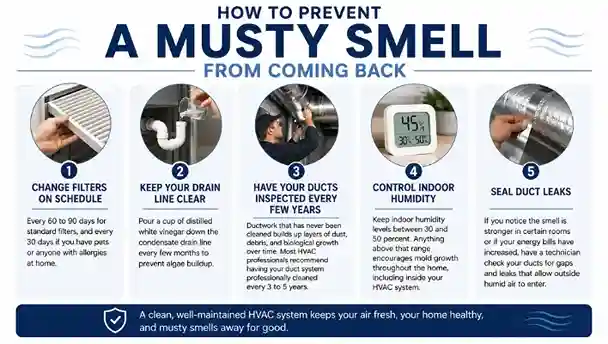
How to Prevent a Musty Smell From Coming Back
Prevention is much easier than treatment. Here is what keeps your system smelling clean long term:
Change filters on schedule. Every 60 to 90 days for standard filters, and every 30 days if you have pets or anyone with allergies at home.
Keep your drain line clear. Pour a cup of distilled white vinegar down the condensate drain line every few months to prevent algae buildup.
Have your ducts inspected every few years. Ductwork that has never been cleaned builds up layers of dust, debris, and biological growth over time. Most HVAC professionals recommend having your duct system professionally cleaned every 3 to 5 years.
Control indoor humidity. Keep indoor humidity levels between 30 and 50 percent. Anything above that range encourages mold growth throughout the home, including inside your HVAC system.
Seal duct leaks. If you notice the smell is stronger in certain rooms or if your energy bills have increased, have a technician check your ducts for gaps and leaks that allow outside humid air to enter.
Musty Smell vs. Other HVAC Odors: How to Tell the Difference
Not every HVAC smell is mold related. Knowing the difference helps you respond correctly.
Musty or damp smell: Almost always mold, mildew, or stagnant water inside the system.
Burning or electrical smell: That smell could be from overheating wires, a failing motor, or melted insulation, indicating the system is working too hard or a part is breaking down. If the smell gets stronger near the vents or returns every time the heat runs, do not ignore it.
Rotten egg smell: This odor could mean a natural gas leak, especially if your furnace uses gas and the smell seems strongest near vents or near the unit itself. If you smell this and it does not fade quickly, leave the area and contact your gas provider immediately.
Dirty sock smell: A variation of the musty odor specifically linked to bacteria growing on a wet evaporator coil. HVAC technicians sometimes call this “dirty sock syndrome,” and it is extremely common in homes where the cooling system sits unused for extended periods before being turned on again.
The Bottom Line
A musty smell from your vents is your HVAC system telling you that moisture and biological growth have taken hold somewhere inside the ductwork, coil, drain system, or filter. It will not go away on its own. Left untreated, it spreads mold spores through your home continuously and can worsen allergy and respiratory symptoms for everyone inside.
Start with the simple steps: replace your air filter, inspect your drain pan, and check for anything blocking your vents. If the smell continues after those steps, the problem is deeper inside the duct system and requires professional attention.
Getting your air ducts professionally cleaned removes the source of the odor rather than masking it. For residents dealing with musty vent smells in Johnson County and the surrounding areas, a qualified air duct cleaning technician can inspect your full system, sanitize the ductwork, and give you a clear picture of exactly what is causing the problem in your home.