The most common myths about air duct cleaning debunked in this article will surprise you, because most homeowners in Olathe have believed at least one of them for years without ever questioning it.
And honestly, that is not their fault.
Air ducts are invisible. They run behind your walls, above your ceilings, and underneath your floors. You cannot see inside them, you cannot easily inspect them, and most of the time you cannot tell whether anything is wrong until the problem is already affecting your family’s health or your energy bills. That invisibility creates the perfect environment for myths to grow and stick.
Some of these myths come from outdated information that has been passed around neighborhoods and online forums for decades. Some come from bad experiences with unqualified contractors who did a poor job and left homeowners feeling like the whole service was a waste of money. And some simply exist because ignoring the ductwork is a lot more convenient than dealing with it.
Whatever the source, believing the wrong things about your duct system has real consequences. It means getting cleanings too rarely, or not at all. It means spending money on DIY solutions that do not work. It means living with poor indoor air quality without realizing your HVAC system is the reason.
This article breaks down the seven most common myths, replaces each one with the actual facts, and helps you make a confident and informed decision about your home.
Myth 1: Air Ducts Do Not Get Dirty If You Keep a Clean Home
This is probably the most widespread myth of all. The logic seems reasonable on the surface. If you vacuum regularly, keep surfaces clean, and replace your filters on schedule, surely the air ducts stay clean too?
Unfortunately, that is not how it works.
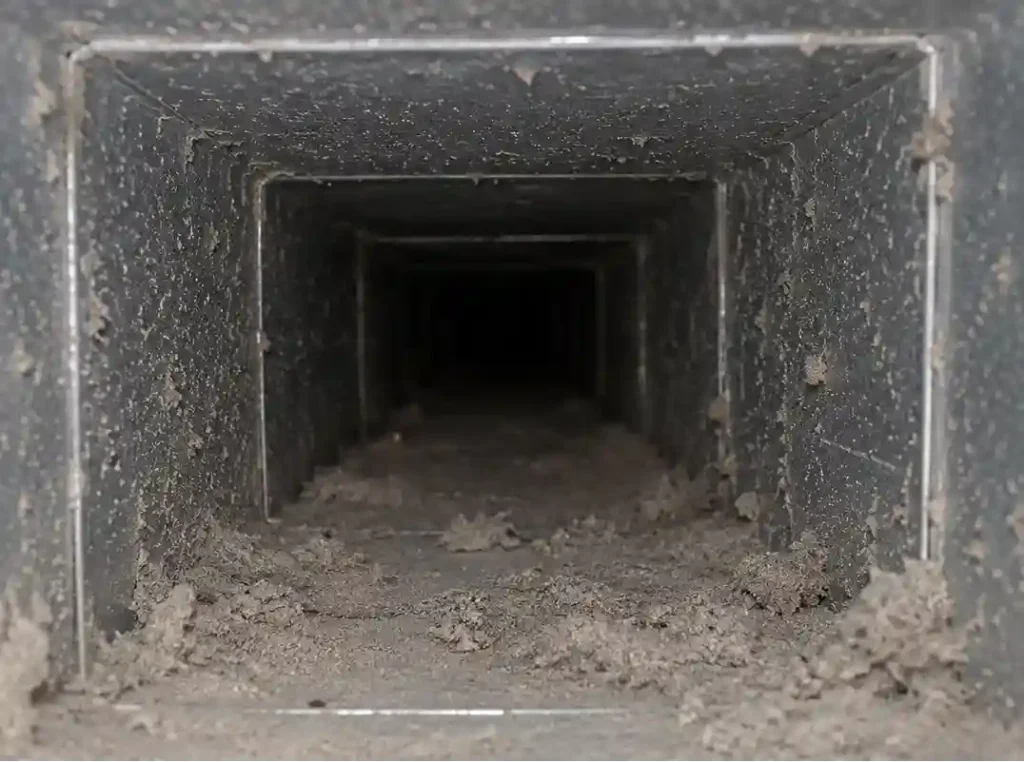
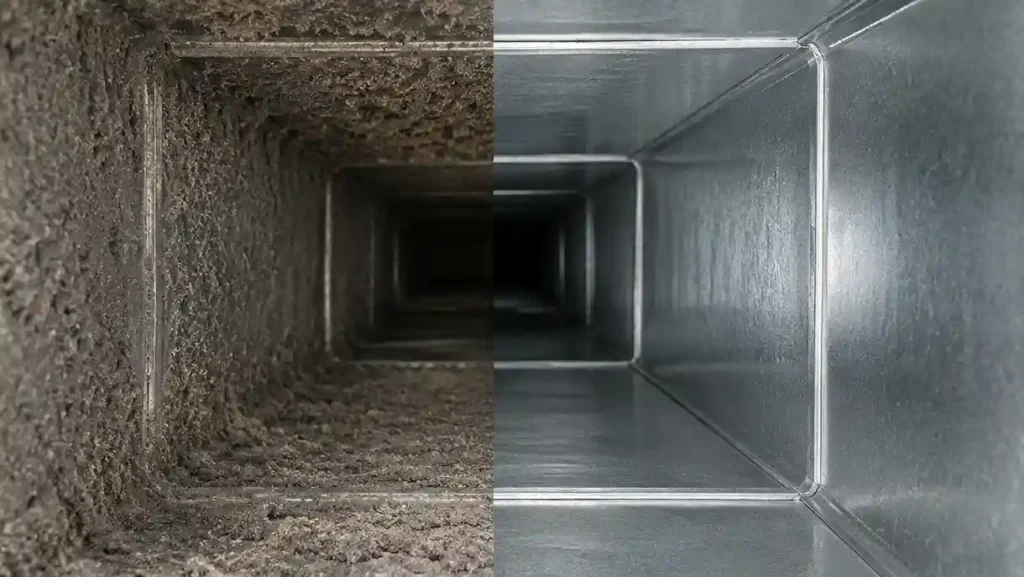
In a typical six-room home, up to 40 pounds of dust is created annually through everyday living. That dust comes from skin cells, fabric fibers, pet dander, pollen that enters through doors and windows, and particles released during cooking and everyday movement. No matter how diligent you are with surface cleaning, a portion of that debris gets pulled into the HVAC system through the return air vents and deposits itself inside the ductwork.
Surface cleanliness and duct cleanliness are two completely separate things. Your mop and vacuum cannot reach inside six inches of metal ductwork running through your walls. The dust that settles inside those passages stays there, accumulating layer by layer over months and years, until a professional cleaning removes it.
The fact that your home looks and smells clean does not tell you anything about what is building up inside the duct system.
Myth 2: Replacing Your Air Filter Is Enough to Keep Ducts Clean
This myth is understandable because filters are the most visible maintenance task connected to HVAC systems. Change the filter regularly and you are taking care of the system. Right?
Partially right. But only partially.
A filter captures particles drifting through the return side of the system, yet long runs of sheet metal passages remain untouched. Dust, drywall grit, pet hair, and even lost screws settle inside those passages. A filter change is good practice, but it cannot extract debris glued to duct walls. Periodic mechanical brushing plus negative pressure extraction reach deposits a filter never sees.
Standard one-inch HVAC filters are primarily designed to protect the equipment, not to purify the air in your home. Even high-efficiency MERV-rated filters have a limitation: they only capture what passes through them at the intake. Anything already settled deep inside the duct system is beyond their reach entirely.
Think of it this way. Changing the air filter on your HVAC is like putting a screen over your window to catch insects. It helps, but it does not clean the inside of your walls. The filter is a first line of defense, not a substitute for cleaning what has already built up inside the system.
Myth 3: You Only Need Duct Cleaning When Something Is Obviously Wrong
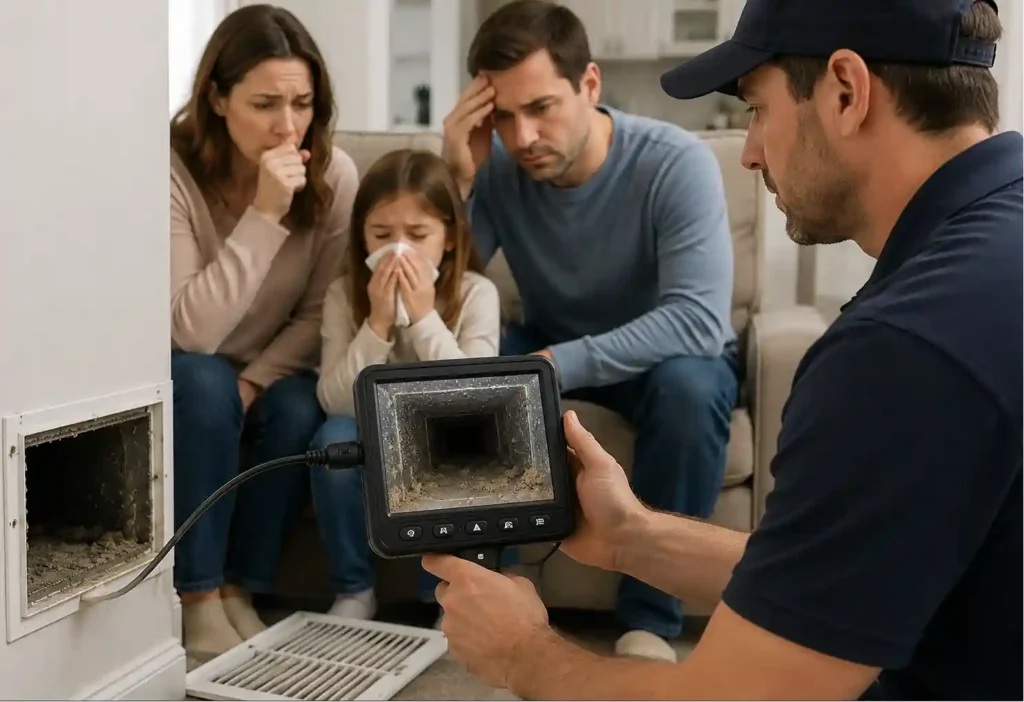
Many homeowners treat duct cleaning as a reactive service. They wait until they see dust blowing out of vents, smell something strange, or notice family members getting sick before they think about the ductwork. By that point, the problem has already grown large enough to show symptoms.
Air duct cleaning should be a preventive measure that is part of your ongoing maintenance to clean dust, pollen, pet dander, and other contaminants from your ductwork, not merely something you do as a reaction to visible mold or airflow issues.
Waiting for visible signs means you are waiting for the contamination to reach a level that is already affecting your indoor air quality and potentially your family’s health. A duct system does not go from clean to dangerously dirty overnight. It happens gradually over years, and the buildup causes ongoing low-level exposure to allergens and irritants long before the signs become obvious enough to notice.
The National Air Duct Cleaners Association recommends inspection first; cleaning is advised when debris or microbial growth is documented. A professional inspection can tell you the actual condition of your ductwork before the problem reaches a critical point, rather than after.
Myth 4: DIY Duct Cleaning With a Vacuum Does the Job
This myth has grown in the era of YouTube tutorials and the belief that everything can be done yourself with the right video guide. There are countless tutorials showing people cleaning air vents with a household vacuum and a long brush attachment. It looks simple enough.
The reality is that what those videos show is surface cleaning of the vent grilles, not actual duct cleaning.
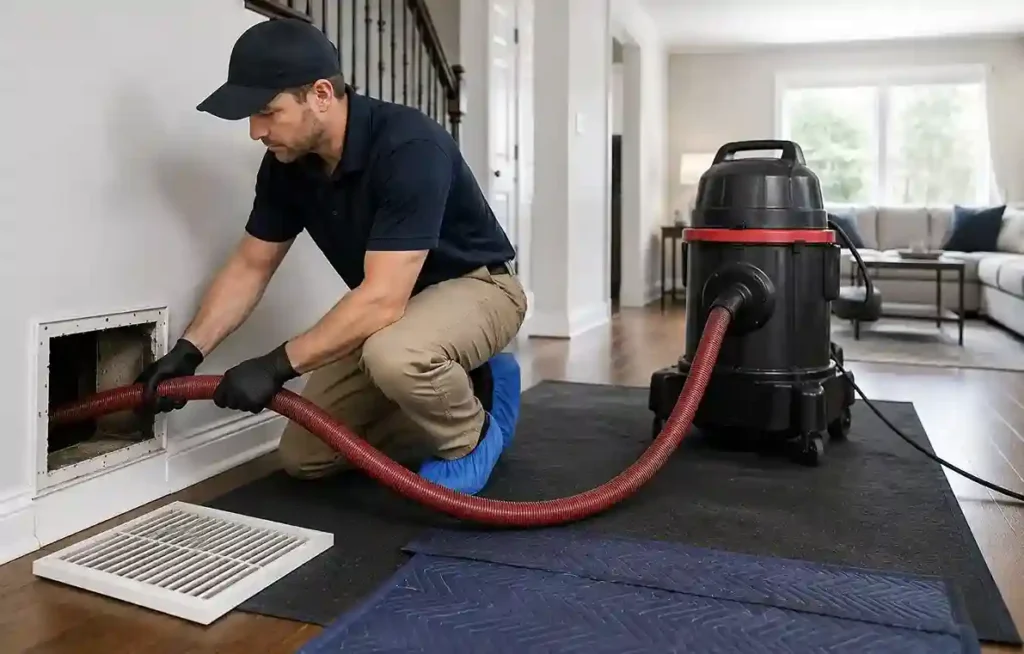
Cleaning air ducts is not a do-it-yourself job like dryer vent cleaning can be. To get the outcome you want for your air duct system, the right professional-grade tools and a proper air duct cleaning process must be followed. Residential air duct cleaning is performed by using a high-end roto-brush machine with a HEPA filter and vacuum to get the best results.
A standard household vacuum does not generate anywhere near enough suction to pull debris from deep inside ductwork. Worse, inserting a brush into the duct without proper negative pressure vacuum equipment can actually dislodge settled debris and push it further into the system or release it into the air in your home.
A beginner will end up pushing the dust more into your house instead of pulling it all out like a professional with proper equipment.
Professional duct cleaning uses negative air pressure combined with rotating brush systems that work from inside the duct walls outward. The entire system is under suction during the process so that dislodged particles are captured and removed rather than redistributed through the home. That is a level of equipment and technique that no DIY approach can replicate.
Myth 5: Duct Cleaning Makes Your Home Messy
This is one of the most common reasons homeowners put off scheduling a cleaning. The mental image of technicians dragging equipment through the house and leaving a trail of dust everywhere is not appealing.
As long as you hire a trusted, trained professional service, you should not have to worry about a big mess after a duct cleaning.
Here is why. A professional duct cleaning is performed under negative air pressure. Before any dislodging of debris begins, the technician seals off the duct system and connects it to a powerful HEPA-filtered vacuum unit. Everything that is dislodged during the cleaning process gets pulled directly into the collection system rather than released into your living space.
While the exterior of your home may get slightly dusty during the process, that is only until the experts are done purifying your air quality by taking out all the dust and allergens from the ducts.
A qualified technician will also protect your floors and furniture during the process. The result when they leave should be a home that is cleaner than before they arrived, not dirtier. If a company’s cleaning process is leaving behind a significant mess, that is a sign they are not using proper equipment or technique, which is a reason to choose a better company, not a reason to avoid the service entirely.
Myth 6: Air Duct Cleaning Is a Scam and Does Not Actually Work
This is a myth with a complicated origin. It exists partly because the EPA has published cautious language about air duct cleaning, noting that the research on its health benefits is not fully conclusive. Some dishonest companies have also used fear-based sales tactics and low-quality equipment over the years, leaving homeowners feeling like they paid for nothing. That history has given the entire service a reputation problem it does not fully deserve.
The truth is more nuanced. When performed correctly by a trained professional using proper equipment, duct cleaning does work. It physically removes the accumulated debris from inside the duct system so that debris is no longer being recirculated through your home with every cycle of the HVAC system.
Removing accumulated dust, pet dander, and pollen from inside the ductwork can significantly improve indoor air quality. Homeowners consistently report less sneezing, fewer lingering odors, and better overall comfort after a professional cleaning is completed.
The EPA’s position is not that duct cleaning does not work. It is that cleaning ducts which are not particularly dirty may not produce a measurable health benefit. In other words, the service works when it is actually needed. The real question is whether your specific ducts need attention right now, and a proper inspection by an experienced technician can answer that before any money is spent.
The scam risk in this industry is real, but it is a risk associated with choosing the wrong company, not with the service itself. Choosing a professional who inspects before they quote, explains their process clearly, and uses proper equipment is the best way to make sure you get genuine value from the service.
Myth 7: One Cleaning Lasts Forever and You Never Need to Do It Again
Some homeowners get their ducts cleaned once after moving into a new home or after a renovation and consider the matter permanently handled. It is not.
While it depends a lot on your lifestyle and your location, you cannot rely on just a one-time air duct cleaning service. Your home needs ductwork cleaning every three to five years if you want to maintain air quality.
Ductwork accumulates debris continuously because the HVAC system runs continuously. Every time the system cycles on, it pulls air through the return vents, depositing particles inside the duct walls. Over a three to five year period that process creates a meaningful layer of buildup regardless of how clean the ducts were after the last service.
A home with shedding pets or renovation dust may need service every two to three years, while a lightly occupied home could wait five or more years.
In Olathe, Kansas, where residents run their HVAC systems intensively through both hot summers and cold winters, the accumulation rate is higher than in milder climates. For homes with pets, young children, or family members with asthma or allergies, a two to three year interval is more appropriate than waiting five years.
The right question is not whether you will ever need another cleaning. The right question is how often your specific home and lifestyle require it.
How to Choose the Right Air Duct Cleaning Company in Olathe KS
Not every air duct cleaning company operates the same way. Before you book anyone, here are the things worth checking.
Ask whether the technicians follow NADCA standards for duct cleaning. A company that is familiar with industry best practices will be able to explain their process clearly, tell you what equipment they use, and give you a straight answer about whether your ducts actually need cleaning before pushing you to book a service.
A trustworthy company will inspect first and quote after. If someone gives you a price over the phone without asking about your home size, number of vents, or system condition, that is a red flag.
Pay attention to the equipment being used. Professional duct cleaning requires high-powered vacuum systems with HEPA filtration, not standard shop vacuums. The difference in results is significant.
If a company tells you that you need your ducts cleaned every few months, walk away. Reputable professionals recommend cleaning every three to five years for most homes, with more frequent service only for specific situations like pets, renovations, or allergy sufferers.
In the Olathe area, professional residential duct cleaning typically starts from around $300. Prices significantly below that range are usually a sign of inadequate equipment or bait-and-switch pricing where the low number climbs quickly once the technician is inside your home.
What Duct Cleaning Actually Does and Does Not Do
Part of why myths persist is that people sometimes have unrealistic expectations of what duct cleaning can accomplish. Being clear about both sides helps set the right expectations.
What professional duct cleaning does: removes accumulated dust, debris, pet dander, and biological contaminants from inside the duct system; improves airflow through the system; reduces the volume of airborne particles circulating through the home; eliminates odors caused by mold, pest activity, or settled debris; and reduces the load on your HVAC system so it runs more efficiently.
What duct cleaning does not do: it does not replace the need for regular filter changes; it does not address mold that is caused by an underlying moisture problem without also fixing that moisture source; it does not permanently seal leaky ductwork; and it does not remove all indoor air contaminants since carpets, curtains, and upholstery also hold allergens that duct cleaning does not reach.
Understanding both sides of that equation helps you get the most value from the service and set realistic expectations for the results.
Frequently Asked Questions
Is air duct cleaning worth it?
Yes, when your ducts actually need it. A professional inspection by a NADCA-certified technician is the best way to determine whether your specific system needs cleaning now. For homes with pets, allergy or asthma sufferers, recent renovations, or systems that have gone more than three to five years without service, the benefits are very real.
How long does a professional duct cleaning take?
A thorough air duct cleaning usually takes three to five hours for an average home. Experienced technicians can efficiently clean your entire system while minimizing disruption to your household, and the process is typically completed in a single visit.
Does duct cleaning help with allergies?
Yes. Removing accumulated pet dander, dust mite debris, mold spores, and pollen from inside the duct system reduces the volume of airborne allergens being circulated through your home every time the HVAC runs. Most allergy sufferers notice an improvement within a few weeks of a professional cleaning.
How much does duct cleaning cost in Olathe KS?
Professional residential duct cleaning in Olathe typically starts from around $300 and varies based on the size of the home and the condition of the system. Contact us for an honest, no-pressure assessment of your specific situation.
Can duct cleaning damage my HVAC system?
Professional duct cleaning should not cause any damage to the HVAC system when performed by trained technicians using appropriate equipment and techniques. Damage concerns are typically associated with unqualified contractors using abrasive tools or excessive pressure on flexible ductwork. A NADCA-certified company uses equipment and methods specifically designed to clean without causing harm.